
Turning Mineral Wasteinto carbon-negative cement
Transforming waste concrete, quarry fines and mineral residues into the cement industry’s most needed solution
Contact Page
Cement producers need lower cost ways to cut clinker
SCM Supply is Shrinking
European fly ash output has halved in a decade
High Cost
Green premiums block adoption at scale.
Integration Challenges
New supply chains demand costly retrofits
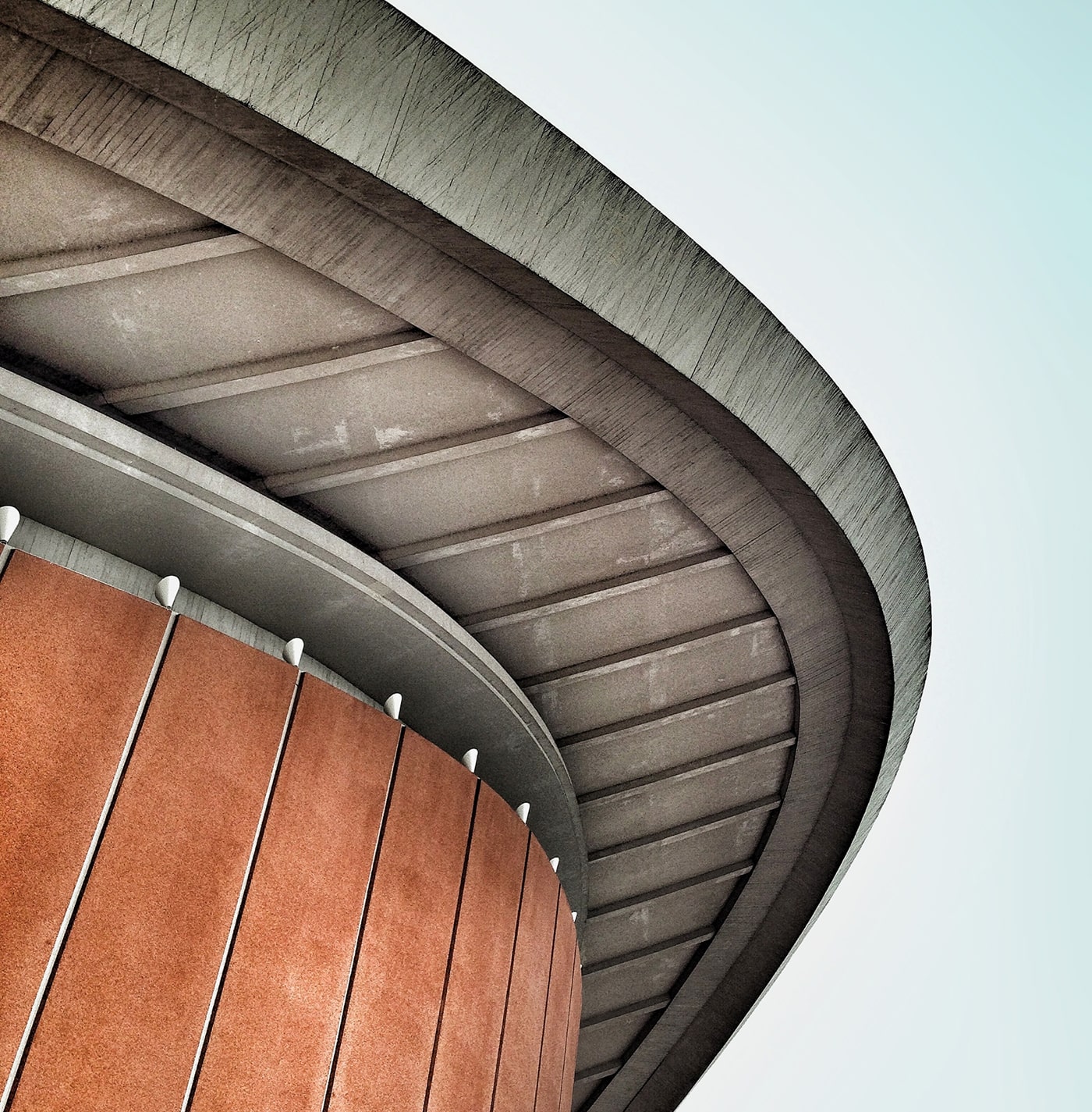
Waste concrete holds stranded mineral value.
Every year, large volumes of concrete are demolished, crushed and downcycled. The cement-rich fine fraction still contains valuable calcium- and silica-bearing minerals – the building blocks of new cementitious materials.
Ureaka sees this not as waste, but as an abundant feedstock for low-carbon cement replacement.
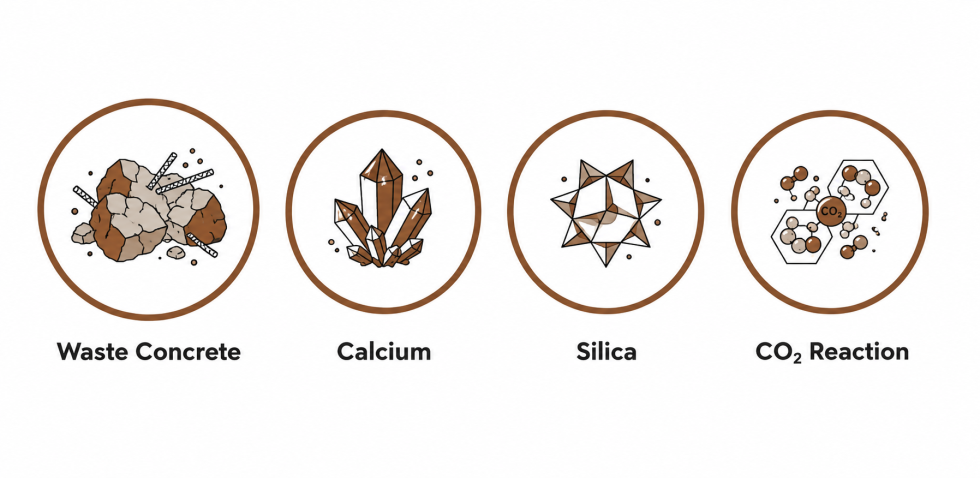
How Ureaka turns waste concrete into cement replacement
We recover mineral value from waste concrete fines, combine it with CO₂ mineralisation, and produce a carbon storing supplementary cementitious material.
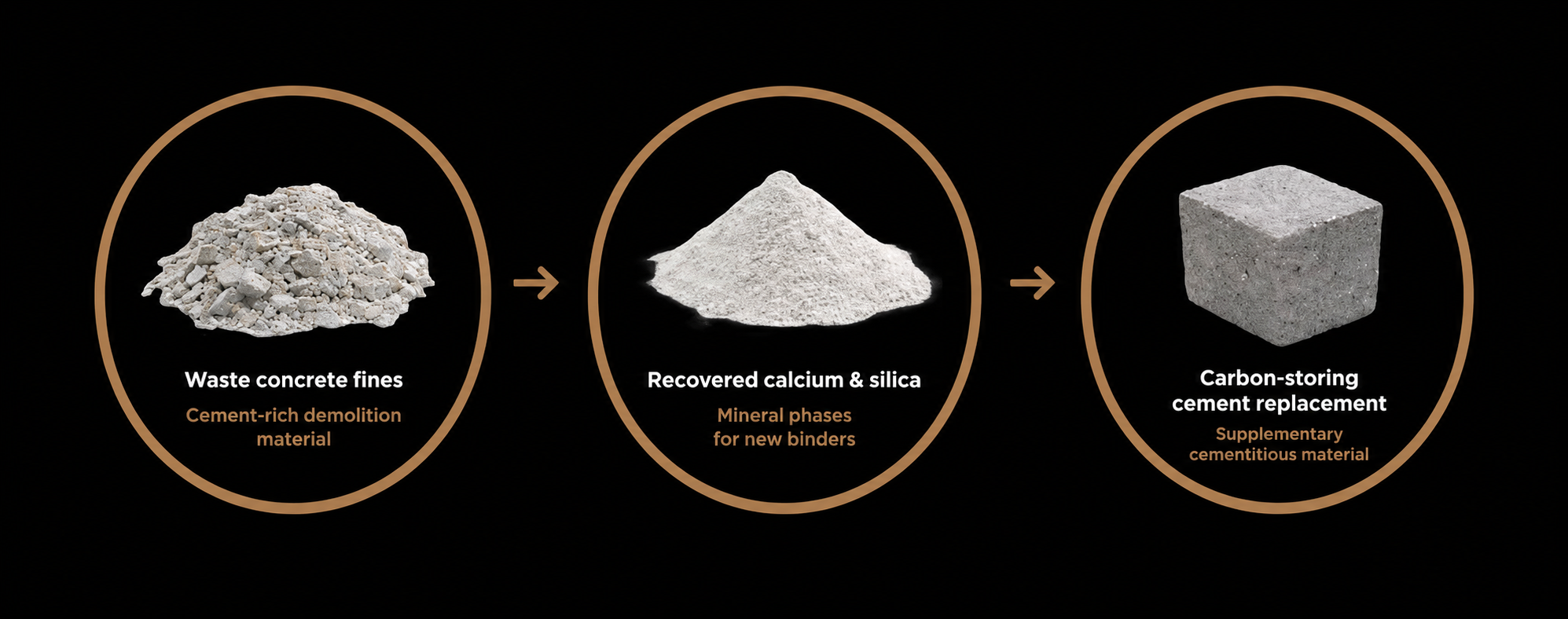
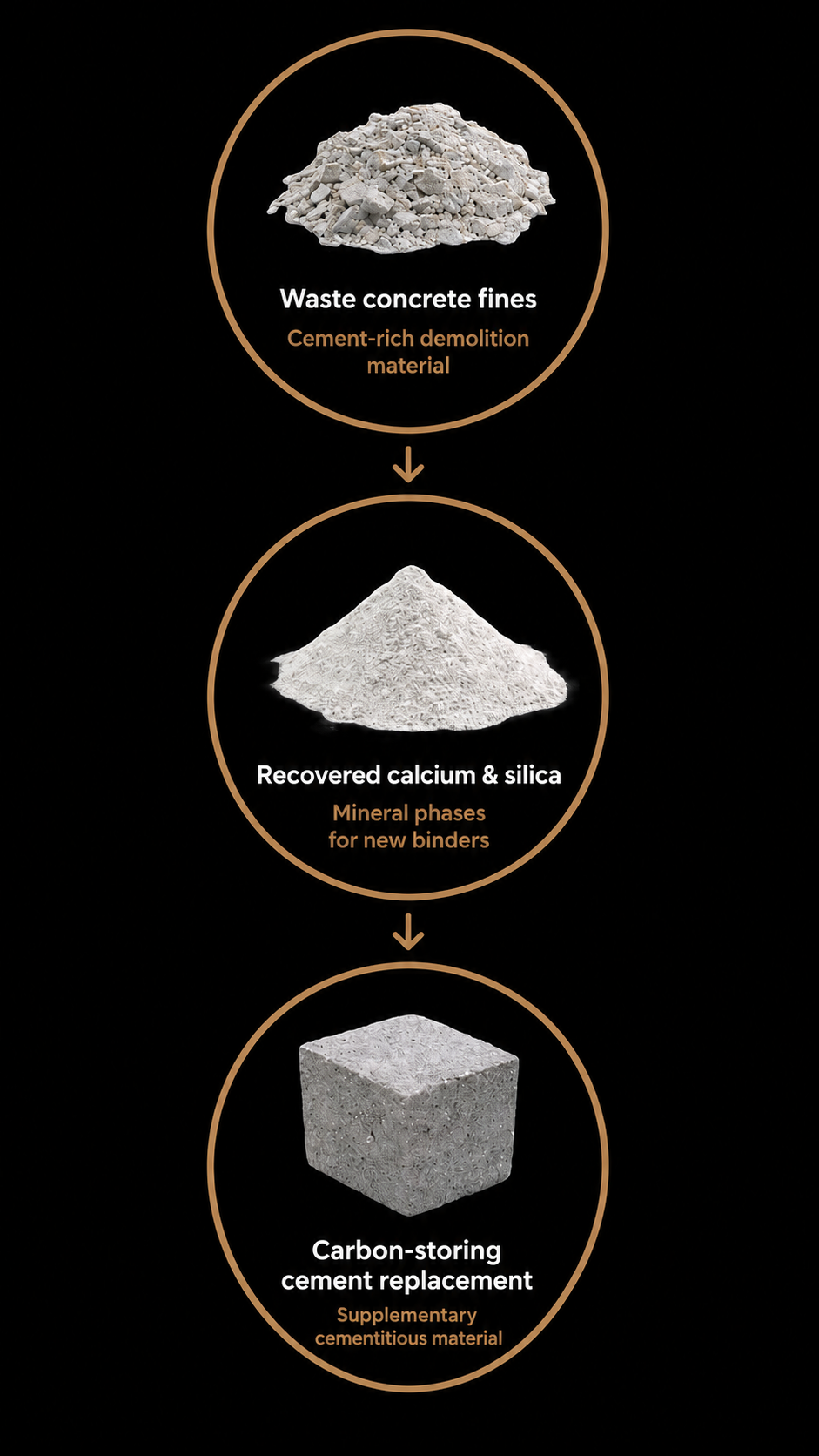
Demonstrating cement replacement performance
30% cement replacement achieved
28-day performance aligned with SCM standards
Drop-in pathway for lower-carbon concrete
Why the Economics Can Work
Most low-carbon cement technologies struggle because they add cost. Ureaka is designed around low-value feedstocks, low-energy processing and circular reagent use.
A pathway to carbon-negative cement replacement without a green premium.
Innovators at Work
Ureaka is led by a team with deep experience across carbon capture, cement chemistry, mineral processing and sustainable construction. Together, they are developing a practical route to turn waste concrete into valuable low carbon cement materials.